Picture this: it is 8:17 p.m. on a Tuesday, your stomach is staging a full-scale revolt, and the only thing in the fridge is a pack of chicken breasts that have seen better days. You could do the sad stir-fry again, or you could crank out a skillet of Creamy Tuscan Chicken so outrageously good that your neighbor will knock just to ask what smells like a trattoria exploded in your kitchen. I have been that neighbor, and I have also been the cook who refuses to settle for “just okay.” That refusal led me here, to the version that makes my friends text me the next morning demanding the recipe in ALL CAPS. It is rich without being heavy, garlicky without weaponizing your breath, and sun-dried-tomato-bright in a way that makes the classic restaurant rendition taste like wallpaper paste. I dare you to taste this and not go back for seconds—actually, thirds. Stay with me here—this is worth it.
Most recipes get this completely wrong. They drown the chicken in floury goo, bury the spinach until it looks like swamp confetti, and treat garlic like an afterthought. Here, we sear first so the meat stays juicy, build the sauce in the same skillet so every browned bit becomes liquid gold, and finish with a whisper of lemon that snaps the whole thing into focus. The result is chicken that slices like butter, sauce that coats pasta like velvet, and crispy edges that shatter like thin ice under your fork. Future pacing: picture yourself pulling this out of the oven, the whole kitchen smelling like you hired an Italian grandmother for the night, and your phone already buzzing with “OMG what is that?” messages.
I will be honest—I ate half the batch before anyone else got to try it. I stood at the stove “tasting for seasoning” until my significant other wandered in, spoon in hand, and gave me the look that said we both knew dinner was technically over. If you have ever struggled with dried-out chicken or sauce that separates into an oily crime scene, you are not alone—and I have got the fix. Let me walk you through every single step—by the end, you will wonder how you ever made it any other way.
What Makes This Version Stand Out
Flavor Bomb: We layer fat three ways—butter for browning, olive oil for fruitiness, and a kiss of mascarpone that melts into the sauce like clandestine silk.
Texture Tango: Crispy seared edges contrast with a creamy blanket, while spinach wilts just enough to stay vibrant instead of slimy.
One-Skillet Swagger: Fewer dishes than a college dorm, but the final plate looks Michelin-ready. You will not babysit multiple pans or preheat an oven.
Speed Demon: From fridge to fork in 35 minutes flat, making it faster than take-out and roughly a thousand times tastier.
Leftover Legend: The sauce actually improves overnight; tomorrow’s lunch will taste like you planned it as a meal-prep flex.
Crowd Whisperer: I have served this to toddlers, teens, and picky mother-in-laws—silence always falls, followed by the unmistakable scrape of forks chasing the last drops.
Ingredient Integrity: No canned “cream of” soups, no stabilizers, no cornstarch slurry that gloops like kindergarten paste—just real dairy, real aromatics, real life.
Alright, let us break down exactly what goes into this masterpiece...
Inside the Ingredient List
The Flavor Base
Chicken breasts are the canvas, but we treat them like VIPs. Pound them to an even thickness so every bite cooks at the same rate—no more rubbery ends and raw centers. Salt them like you mean it, at least 45 minutes before cooking if you can; the seasoning penetrates rather than crusting on the surface like cheap armor. Black pepper should be freshly cracked; the pre-ground stuff tastes like pencil shavings and nobody invited that to dinner.
The Texture Crew
Heavy cream forms the luxurious backbone, but we cut it with a splash of chicken stock so the sauce drapes instead of suffocate. Mascarpone is the secret handshake—milder than cream cheese, it melts without graininess and adds a subtle sweetness that plays against the tangy tomatoes. Baby spinach wilts in seconds and brings a pop of color that screams “I eat vegetables, Mom,” even when we are basically eating cream.
The Unexpected Star
Okay, ready for the game-changer? A pinch of red-pepper flakes blooms in the butter and quietly amplifies every other flavor without announcing “I am spicy.” Sun-dried tomatoes are umami grenades; dice them fine so they melt into the sauce and leave little ruby flecks that look like confetti. Garlic goes in last so it stays punchy—burnt garlic tastes like regret and bitterness.
The Final Flourish
Fresh lemon zest added off-heat is like house lights coming up at a concert—suddenly you see everything clearly. A handful of grated Parmesan melts on contact and adds those nutty crystals that make you close your eyes involuntarily. Finish with parsley because green specks make us feel fancy, and because it freshens the aroma so you do not face-plant into pure richness.
Everything is prepped? Good. Let us get into the real action...
The Method — Step by Step
- Pat the chicken very dry—moisture is the enemy of the mahogany crust we are chasing. Season both sides with 1 tsp kosher salt, ½ tsp black pepper, and a whisper of smoked paprika for color. Heat a 12-inch stainless or cast-iron skillet over medium-high until a drop of water skitters like it is late for a meeting. Add 1 Tbsp each of butter and olive oil; when the foaming subsides, lay the chicken away from you so the oil does not splash onto your forearms like napalm.
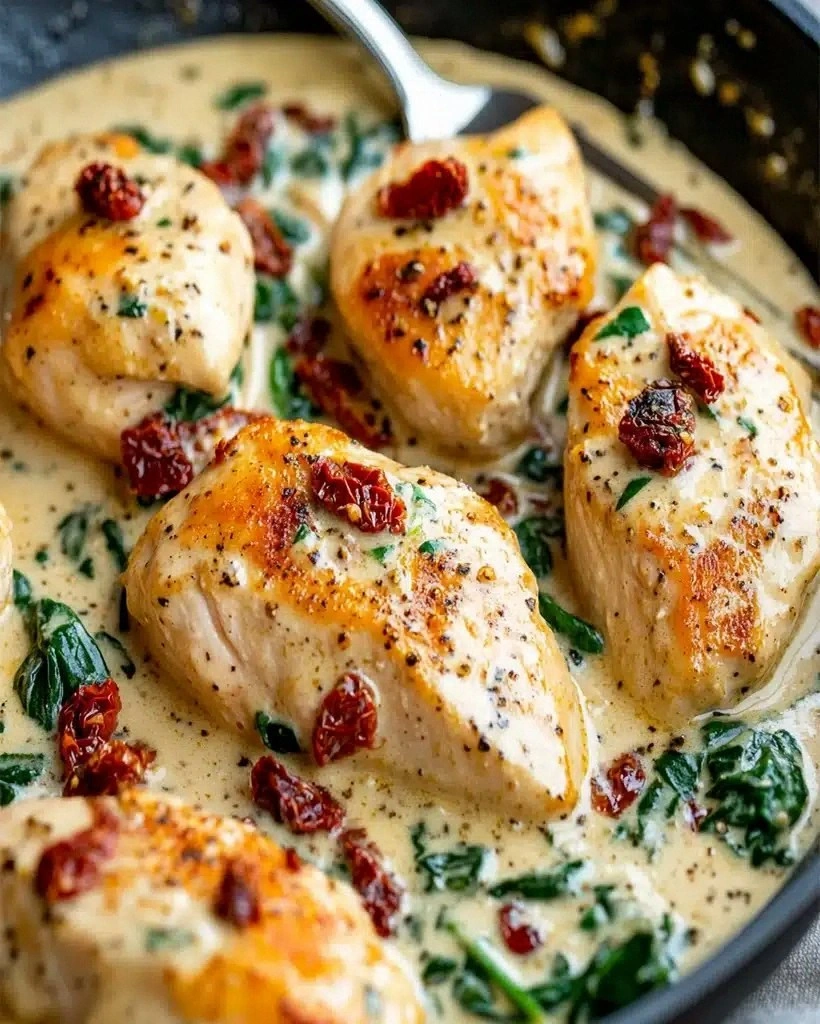
- Cook undisturbed for 4–5 minutes. Do not poke, do not scoot, do not Instagram. That sizzle when it hits the pan? Absolute perfection. When the edges turn opaque halfway up the side and the underside releases without tearing, flip. You should see golden sear marks that look like you branded a map of Tuscany onto the surface. Transfer to a plate; they will finish later in the sauce.
- Drop the heat to medium and toss in 1 Tbsp butter plus your minced shallot. Scrape the brown bits with a wooden spoon—those are flavor fossils. Cook until the shallot is translucent and smells like sweet, buttery heaven, about 90 seconds. Add the garlic and red-pepper flakes; stir just until fragrant, 30 seconds. Garlic burns faster than gossip spreads, so keep it moving.
- Pour in the chicken stock and let it reduce by half; this concentrates the salt and minerals into a quick homemade demi-glace. Add the heavy cream and bring to a gentle simmer—tiny bubbles around the edge, not a rolling boil that curdles dairy. Whisk in the mascarpone until it disappears like a secret, then add the sun-dried tomatoes. The sauce will blush a dreamy coral color that looks like sunset in a pan.
- Nestle the chicken and any resting juices back into the skillet. Spoon sauce over the top so every piece gets a creamy hoodie. Reduce heat to low, cover, and simmer 5–7 minutes until the internal temp hits 160°F. The spinach goes in during the last 2 minutes; poke it down gently so it wilts but stays emerald. Overcooked spinach turns into the sad green pulp your school cafeteria served.
- Off heat, stir in Parmesan, lemon zest, and parsley. Taste the sauce—this is the moment of truth. It should be salty, peppery, creamy, and bright all at once. If it feels flat, add a squeeze of lemon; if it screams, a pinch of sugar tames the acid. Let it rest 3 minutes so the sauce thickens just enough to cling lovingly to whatever starch you ladle it over.
- And now the fun part. Serve straight from the skillet with crusty bread, or spoon over fettuccine, mashed potatoes, or even cauliflower rice if you are pretending to be virtuous. Garnish with extra parsley because we eat with our eyes first, and dig in while the edges still bubble like a hot spring.
That is it—you did it. But hold on, I have got a few more tricks that will take this to another level...
Insider Tricks for Flawless Results
The Temperature Rule Nobody Follows
Pull the chicken at 160°F and let carry-over heat nudge it to 165°F while it lounges in the sauce. Anything higher and protein fibers contract like overcooked rubber bands, squeezing out every drop of moisture you worked to preserve. A $12 instant-read thermometer saves you from serving poultry that tastes like desert sand. A friend tried skipping this step once—let us just say it did not end well, and the dog got the bulk of dinner.
Why Your Nose Knows Best
When the garlic hits the butter, start sniffing. The moment it smells nutty and sweet, you have about 15 seconds before it crosses into bitter territory. Think of it as a culinary trust fall—you have to move fast but confidently. If you accidentally burn it, wipe out the pan and start over; there is no rescue mission for acrid garlic.
The 5-Minute Rest That Changes Everything
After cooking, let the skillet sit off heat, partially covered, for five tiny minutes. The sauce tightens, flavors meld, and you get to wipe down the counter without risking a scorched bottom. This is also the perfect window to set the table or pour yourself the glass of wine you absolutely earned.
Creative Twists and Variations
This recipe is a playground. Here are some of my favorite ways to switch things up:
Seafood Swap
Replace chicken with jumbo shrimp; sear them just until pink, remove, then proceed with the sauce. Fold the shrimp back in at the end so they stay plump and tender. Finish with a squeeze of orange instead of lemon for a coastal vibe that tastes like vacation on the Amalfi coast.
Vegetarian Powerhouse
Use thick slabs of cauliflower steak seared until caramelized. Swap chicken stock for vegetable broth and add a can of rinsed white beans for protein. The sauce clings to the nooks and crannies of the cauliflower, making it feel decadently meaty without the meat.
Spicy Florentine
Double the red-pepper flakes and add a diced Calabrian chili for a slow, humming heat. Stir in a handful of torn basil at the end instead of parsley; the licorice notes dance with the spice like flamenco partners. Serve over polenta to soak up the fiery cream.
Mushroom Maverick
Add 8 oz sliced cremini mushrooms after the shallot; cook until they give up their liquid and reabsorb it, concentrating earthy flavor. Use thyme instead of parsley for a woodsy perfume that makes the dish taste like you foraged in a forest after it rained.
Low-Carb Cloud
Thicken the sauce with 2 Tbsp cream cheese instead of mascarpone and skip any starchy sides. Spoon over roasted spaghetti-squash strands that twirl like pasta but keep carbs in check. You will feel smug and satisfied instead of deprived.
Storing and Bringing It Back to Life
Fridge Storage
Cool completely, then transfer to an airtight glass container; the tomatoes’ acid can etch plastic over time. It keeps up to four days, though good luck keeping it around that long. Store the chicken submerged so the sauce acts like a savory marinade, preventing dry edges.
Freezer Friendly
Portion into freezer bags, press out excess air, and freeze flat for up to two months. Thaw overnight in the fridge—never on the counter unless you enjoy bacterial roulette. The spinach texture will soften, but the flavor remains stellar, perfect for emergency comfort food.
Best Reheating Method
Add a tiny splash of water or stock to a covered skillet over low heat; it steams back to perfection without breaking the cream. Stir gently and frequently, letting it come slowly to 165°F. Microwave works in a pinch, but use 50% power and stir every 30 seconds to prevent sauce separation.