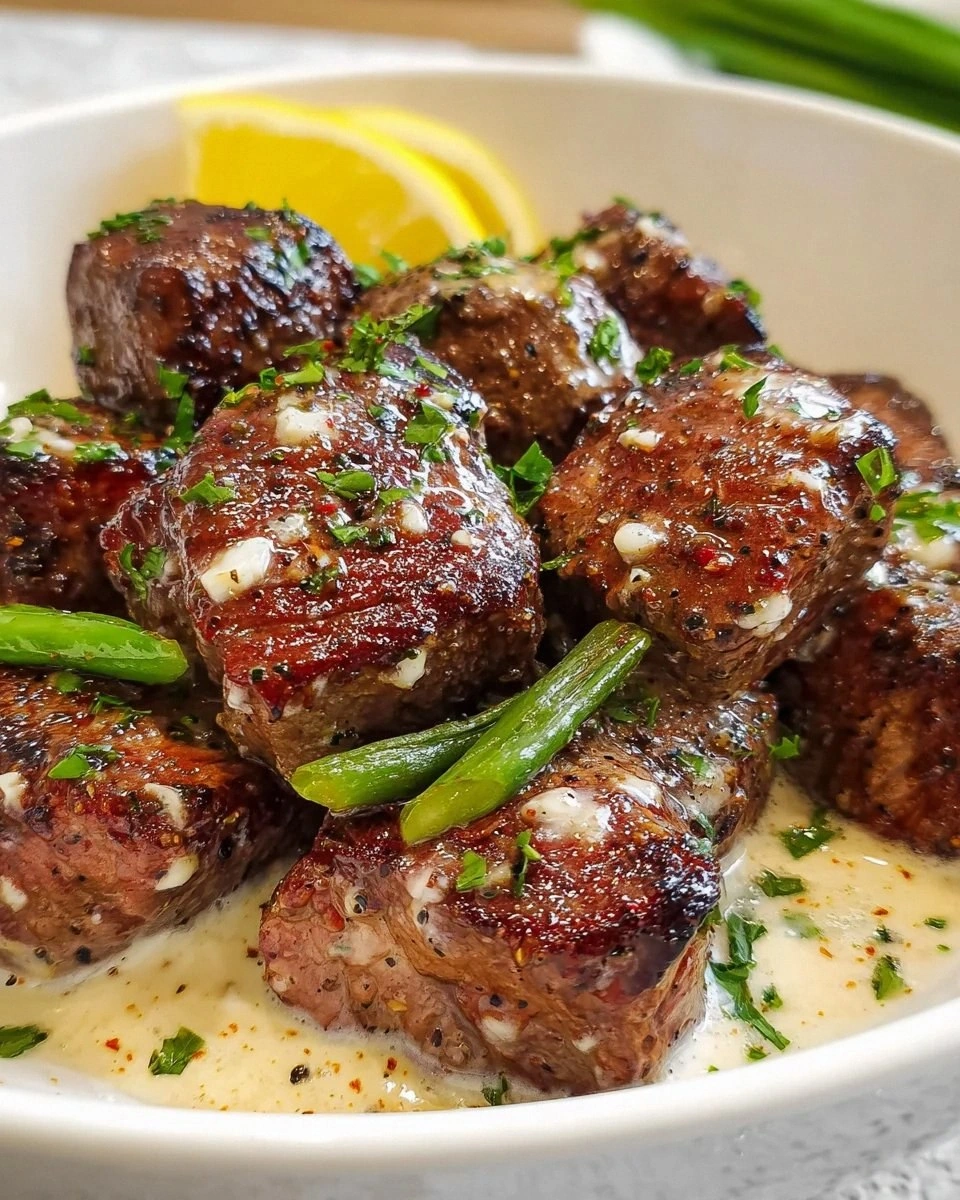
I still remember the night I accidentally created what my family now calls "The Incident" — a glorious, butter-slicked, garlic-bomb of a skillet that started as a desperate attempt to use up steak scraps and ended with three grown adults standing over the stove, shamelessly scooping molten beef cubes straight from the pan with torn chunks of baguette like we’d never heard of plates. The kitchen looked like a crime scene: butter splatters on the backsplash, empty cream cartons on the counter, a suspiciously empty wine glass that definitely wasn’t empty five minutes earlier. But the smell — oh, that smell — was the kind of heady, beefy, garlicky perfume that makes neighbors knock on your wall and ask if you’re opening a restaurant. Somewhere between searing the steak and deglazing with cream, I realized I’d stumbled onto the holy grail of comfort food: tender steak bites swimming in a glossy garlic-butter cloak so rich it could make a cardiologist weep.
Picture this: It’s 9:47 p.m., you’ve had the day from hell, and the only thing standing between you and a bowl of cereal for dinner is a hunk of beef, some butter, and a half-pint of cream that’s dangerously close to expiring. Most people would throw together a stir-fry and call it a night. I, however, am not most people. I seared those steak cubes until their edges turned into caramelized nuggets of umami, then let butter foam and sputter while garlic hit the pan like confetti on New Year’s. The cream went in last, swirling into a sauce so glossy it looked like liquid velvet. One taste and I knew I’d crossed into dangerous territory — the kind of recipe that ruins you for restaurant versions forever. I dare you to taste this and not go back for seconds. Actually, I dare you to taste this and not eat the entire skillet while standing barefoot at the stove, swearing you’ll start that diet tomorrow.
Here’s the kicker: Most recipes get this completely wrong. They either cook the steak to shoe-leather toughness or drown it in a thin, floury gravy that tastes like cafeteria sadness. This version? The steak stays blushing pink inside while the sauce reduces into something thick enough to coat the back of a spoon but still pourable enough to puddle gloriously over mashed potatoes. The garlic doesn’t just whisper; it sings baritone. The butter doesn’t just melt; it emulsifies into the cream until you can’t tell where one ends and the other begins. And the Cajun seasoning — oh, we’re not shy here — adds a prickly warmth that blooms slowly, like a sunset in your mouth. If you’ve ever struggled with steak bites that taste bland or tough, you’re not alone — and I’ve got the fix.
Okay, ready for the game-changer? We’re using two-stage heat: ripping-hot avocado oil to build that mahogany crust, then a gentle butter baste to finish so the centers stay ruby and juicy. Heavy cream gets added off-heat so it doesn’t break into greasy specks. And we’re finishing with a snowstorm of Parmesan that melts into stretchy strands, plus red-peake flakes for a final kick. Future pacing moment: Imagine pulling this skillet off the stove, the whole kitchen smelling like a French bistro had a fling with a Cajun roadhouse, and your people hovering nearby with forks at the ready. Stay with me here — this is worth it. Let me walk you through every single step — by the end, you'll wonder how you ever made it any other way.
What Makes This Version Stand Out
Steak That Melts: We’re talking ribeye or tenderloin cut into one-inch cubes so every surface gets crusty while the interior stays buttery soft. Most recipes slice too small and overcook; we keep them chunky enough to stay juicy.
Two-Fat Magic: Avocado oil for the sear, butter for the finish. The oil lets us crank the heat north of 450°F without smoking out the house, then butter swoops in at the end for nutty richness. One fat can’t do both jobs — trust me, I’ve tried.
Garlic in Three Acts: Minced garlic hits foaming butter, then cream carries it everywhere, and finally raw scallion greens shower on top for a bright pop. You get roasted, mellow, and sharp all in one bite.
Cream That Clings, Not Cloys: We reduce heavy cream just until it coats a spoon, then let residual heat thicken it further. Result: a sauce glossy enough for Instagram but light enough that you won’t need a nap after.
Cheese Pull for Days: A fistful of freshly grated Parmesan melts into stretchy webs. Pre-grated stuff has cellulose that blocks melting — buy a wedge and grate it yourself. Your arm workout for the day is done.
One-Skillet Wonder: Sear, sauce, and serve in the same pan. Fewer dishes mean more time to bask in the applause (or eat straight from the stove — no judgment). Make-ahead? Chop the steak and whisk the sauce components in the morning; dinner is ten minutes away.
Inside the Ingredient List
The Flavor Base
Beef tenderloin or ribeye is non-negotiable for steak bites that taste like luxury. Tenderloin gives you cloud-soft tenderness; ribeye brings marbling that bastes itself from the inside. Either way, look for bright red flesh with milky-white fat — no gray spots or yellowing. Skip pre-cut “stew beef”; it’s usually tougher rounds that need hours of braising. Cut the steak into one-inch cubes yourself so every piece has the same muscle fiber direction, which means even cooking and that glorious crust we’re chasing.
Avocado oil has a 520°F smoke point, letting us crank the skillet to volcano heat without setting off alarms. Olive oil taps out around 375°F and turns bitter; butter burns even sooner. If you’re in a pinch, refined peanut or sunflower oil works, but avocado’s neutral flavor lets the beef sing lead vocal.
Cajun seasoning is the party starter: paprika, cayenne, garlic powder, oregano, thyme — a one-stop flavor bomb. I mix my own so I can control salt and heat, but a good store blend works. Taste it first; some brands are saltier than the Dead Sea. You want spicy warmth, not a salt lick.
The Texture Crew
Salted butter forms the emulsified body of the sauce. I use salted because I like the control; if you only have unsalted, add an extra pinch of kosher salt later. Let it foam until the milk solids turn hazelnut brown — that nutty aroma is liquid gold. Don’t rush this; those 90 seconds are where the sauce gets its soul.
Heavy cream must be at least 36% fat. Anything lighter will separate into sad curds when it hits the hot pan. Take the cream out of the fridge when you start prepping; room-temp cream incorporates smoothly and won’t drop the pan temperature. If you’re watching calories, half-and-half works, but the sauce will be thinner — reduce it an extra minute or two.
Parmesan cheese needs to be freshly grated. Pre-shredded cellulose-coated stuff resists melting and tastes like sawdust. Buy a wedge and use the small side of a box grater; you want fluffy snow, not chunky gravel. It melts faster and creates those Instagram-worthy cheese pulls.
The Unexpected Star
Red-pepper flakes are the stealth hero. Just ¼ teaspoon blooms in the butter and gives a gentle back-of-throat warmth that keeps you coming back for “one more bite” until the skillet is mysteriously empty. If you’re heat-shy, start with a pinch; if you’re a chili head, crank it up. The cream tames the fire, so don’t be timid.
Green onions deliver a one-two punch: white parts soften in the butter for sweetness, green tops stay raw for crunch and color. Slice them on the bias; the angled cut exposes more surface area and looks chef-y without any extra effort. No green onions? Chives or even thin scallion greens work, but skip yellow onions — too harsh for this silky sauce.
The Final Flourish
Potatoes become the edible plate for this masterpiece. I use Yukon Golds for their naturally buttery texture; they mash creamy without turning gluey like Russets can. Cut them into even chunks so they cook at the same rate. Boil in well-salted water — it should taste like the ocean — so the potatoes are seasoned from the inside out.
Shredded mozzarella or pepper jack adds a gooey canopy over the mashed potatoes. Mozzarella gives you those stretchy cheese bridges; pepper jack sneaks in extra zing. Use what your family prefers — or better yet, split the pan down the middle and let them pick sides. Fresh parsley at the end is non-negotiable; it cuts the richness and adds a pop of color that says, “I meant to do this all along.”
Everything’s prepped? Good. Let’s get into the real action...
The Method — Step by Step
- Start by parking your steak in the freezer for 15 minutes while you prep everything else. This firms the meat so your knife slices through like a hot blade on fudge, giving you neat cubes instead of squished rags. While the steak chills, whisk together Cajun seasoning, salt, and pepper in a small bowl. Pat the cubes dry with paper towels — moisture is the enemy of a good sear — then season generously on all sides. The surface should look freckled with spice; under-seasoned steak is a tragedy in three acts.
- Heat a 12-inch cast-iron skillet over high heat until a drop of water skitters across like it’s auditioning for a frying pan Olympics. Add avocado oil; it should shimmer immediately and race to the edges. Lay steak cubes in a single layer, leaving air gaps so they sear rather than steam. Work in batches if needed — crowding drops the temp and boils the beef. Let them sit, untouched, for 90 seconds; that sizzle when they hit the pan? Absolute perfection.
- Flip with tongs — the first side should release easily and sport a mahogany crust. Sear the second side another 60 seconds, then transfer steak to a warm plate. They’ll finish cooking later in the sauce, so err on the rare side. Lower heat to medium and add butter; it should foam and smell like hazelnuts within a minute. Scrape the browned bits (fond) with a wooden spoon; that’s liquid flavor clinging to the metal.
- Stir in minced garlic and white parts of green onions; cook 30 seconds until fragrant but not browned. Burnt garlic turns bitter and will hijack the entire dish. Pour in room-temp heavy cream; it will bubble like a witch’s cauldron. Use a spatula to fold the cream into the butter until the sauce turns silky and pale gold. Add red-pepper flakes and let it simmer gently for 2 minutes — just enough to thicken so it coats the back of a spoon.
- Return steak and any resting juices to the pan. Toss to coat; the cubes should glisten like they’ve been dipped in liquid sunshine. Sprinkle Parmesan over the top and fold just until the cheese melts into stretchy ribbons. This next part? Pure magic. Taste and adjust salt; the sauce should be bold, peppery, and just spicy enough to make your lips tingle.
- Meanwhile, boil potatoes in salted water until fork-tender, about 15 minutes. Drain well, then mash with a knob of butter and a splash of cream until fluffy. Spread mashed potatoes into a warm serving dish and shower with shredded mozzarella or pepper jack. Slide the steak bites and sauce over the potatoes; the heat will melt the cheese into a gooey blanket.
- Garnish with green onion tops and parsley. Serve immediately in the skillet for maximum drama, or transfer to a platter if you’re feeling civilized. Either way, set out crusty bread because the sauce is criminal when sopped up. This is the moment of truth — dig in while it’s steaming and watch the cheese pull like taffy.
- Let the skillet rest off heat for 2 minutes before serving. This lets the sauce tighten and the steak relax so juices don’t flood the plate when you cut a cube. Call everyone to the table; this waits for no one. And now the fun part: grab a cube with your fork, twist to wrap it in cheese and potato, and deliver that perfect bite. Close your eyes and chew — you’ll hear angels harmonize.
That’s it — you did it. But hold on, I’ve got a few more tricks that’ll take this to another level...
Insider Tricks for Flawless Results
The Temperature Rule Nobody Follows
Pull the steak off the heat when it hits 120°F for medium-rare; carry-over cooking will nudge it to 130°F while it rests. A friend tried skipping this step once — let’s just say it ended with jerky masquerading as dinner. Use an instant-read thermometer and aim for the center of the largest cube. If you don’t have one, press the steak gently — it should feel like the fleshy base of your thumb when you touch your thumb to your middle finger. Any firmer and you’ve entered well-done territory where flavor goes to die.
Why Your Nose Knows Best
When the butter foams, hover your nose over the pan. You should smell toasted nuts, not raw fat. That’s your cue the milk solids have browned and the sauce base is ready. If it smells like popcorn, you’ve gone too far; pull it off immediately and add a splash of cream to cool it down. Your nose is more reliable than any timer — trust it.
The 5-Minute Rest That Changes Everything
After the steak goes back into the sauce, turn off the heat and let it lounge for five minutes. The meat fibers reabsorb juices, and the sauce thickens just enough to cling without turning gloppy. Cover the skillet with a lid or a sheet pan — think of it as a spa towel for your steak. Skip this and you’ll have puddles on the plate; do it and every cube is glossy perfection.
Creative Twists and Variations
This recipe is a playground. Here are some of my favorite ways to switch things up:
Mushroom Lover’s Dream
Add 8 oz cremini mushrooms, quartered, after searing the steak. Let them soak up the fond and release their earthy juices before the butter goes in. The mushrooms act like little sponges for garlic cream, and you’ll swear you’re eating stroganoff’s cooler cousin.
Surf-and-Turf Upgrade
Toss in a handful of peeled shrimp during the final cream simmer. They cook in two minutes flat and turn the dish into date-night material. Just be sure to pat the shrimp dry or they’ll water down your sauce.
Green Chile Kick
Swap the red-pepper flakes for a diced roasted poblano and use pepper jack on the potatoes. You get gentle heat and a smoky backbone that makes margaritas feel mandatory.
Low-Carb Bowl
Skip the potatoes and serve the steak bites over cauliflower mash or zucchini noodles. The sauce is so decadent you won’t miss the starch — though I’ll be honest, I ate half the batch over roasted cauliflower and still dreamed about bread the next morning.
Breakfast of Champions
Reheat leftovers in a skillet, make two wells, and crack eggs right into the sauce. Cover for three minutes and you’ve got shakshuka’s beefy cousin that’ll ruin you for plain scrambled eggs forever.
Storing and Bringing It Back to Life
Fridge Storage
Cool leftovers completely, then transfer to an airtight glass container. The sauce will thicken into a buttery blanket; steak stays juicy for up to three days. Press plastic wrap directly onto the surface to prevent a skin from forming. Reheat gently in a skillet with a splash of broth or cream over medium-low heat — microwave turns the beef rubbery and the sauce grainy.
Freezer Friendly
Freeze steak and sauce in a single layer inside a zip-top bag; squeeze out extra air and lay flat so it freezes in a sheet. Thaw overnight in the fridge, then warm slowly in a covered skillet. The potatoes don’t freeze well — make fresh or swap for microwave-ready cauliflower rice when you reheat.
Best Reheating Method
Add a tiny splash of water before reheating — it steams back to perfection and loosens the sauce without thinning it too much. Warm over medium-low, stirring often, until the steak is just heated through. Overcooking is the enemy; you want it kissed by heat, not parboiled into submission.