I was standing in my kitchen, staring at a pan that looked like a battlefield after a steak‑night gone wrong. The sirloin had hit the heat, sizzled, and then—boom—smoked like a tiny volcano, leaving my apartment smelling like a burnt gym sock. I swore off steak bowls forever, but then a friend dared me to create something that would make even the most stubborn meat‑hater say, “I’m in love.” I grabbed a bottle of olive oil, a handful of fresh herbs, and a stubborn determination to prove that a Mediterranean steak bowl could be both elegant and ridiculously easy. The result? A bowl that sings with the brightness of lemon, the depth of oregano, and the creamy kiss of tzatziki, all perched on a bed of fluffy quinoa that could make a grain‑purist weep with joy.
Picture this: the first bite hits you with the charred, buttery crunch of a perfectly seared steak, followed instantly by the cool snap of cucumber and the briny pop of Kalamata olives. The aroma of garlic and thyme dances around you like a Mediterranean breeze, while a drizzle of honey‑lemon vinaigrette adds a whisper of sweetness that ties everything together. The sound? A gentle sizzle as the steak hits the pan, the soft clink of a wooden spoon against a stainless steel bowl, and the faint, satisfying crunch of roasted chickpeas. You can almost feel the warm sun on your skin as you dig in, even if you’re huddled under a winter blanket.
Most recipes I’ve tried either overcomplicate the process or skimp on the flavor, leaving you with a bowl that feels more like a side dish than a main event. This version stands out because every component is treated like a star, not a background extra. The secret? A simple yet powerful marination technique that infuses the steak with citrus and herbs, plus a homemade tzatziki that coats each bite like silk. I’ll be honest—I ate half the batch before anyone else got a chance, and I’m still not sorry.
And here’s the kicker: I’m going to reveal a tiny trick that most chefs keep to themselves—a quick brine for the steak that guarantees juiciness without any fancy equipment. Ready to dive in? Let me walk you through every single step — by the end, you’ll wonder how you ever made it any other way.
What Makes This Version Stand Out
- Flavor Explosion: The combination of lemon‑bright marinate and herb‑infused olive oil creates a taste profile that’s both fresh and deep, making every bite unforgettable.
- Texture Symphony: From the caramelized steak edges to the crisp chickpeas and creamy tzatziki, you get a mouthfeel that’s as varied as a Mediterranean market.
- Simplicity Meets Sophistication: All the steps use everyday tools—no sous‑vide, no fancy mandoline—yet the result feels restaurant‑grade.
- Ingredient Integrity: We stick to whole, minimally processed foods, letting each component shine without drowning in sauces.
- Crowd‑Pleaser Factor: Whether you’re feeding a family or impressing a date, this bowl gets rave reviews every single time.
- Make‑Ahead Magic: The components can be prepped ahead of time, making weeknight assembly a breeze.
- Customizable Core: Swap quinoa for cauliflower rice, or skip the feta for a dairy‑free version—this recipe bends to your diet, not the other way around.
- Season‑Proof: It works in summer heat or winter chill, because the flavors are timeless, not tied to a single season.
Inside the Ingredient List
The Flavor Base
Sirloin Steak is the undisputed hero here. Its natural beefy richness provides a sturdy canvas for the bright, herbaceous notes that follow. If you opt for a cheaper cut, you’ll lose that tender bite and the steak may turn rubbery, especially if overcooked. Look for a steak with a fine grain and a bright red color; a thin layer of marbling is a good sign of flavor.
Olive Oil isn’t just a cooking medium; it’s a flavor carrier that brings a subtle fruitiness to the dish. Using extra‑virgin olive oil ensures you get that peppery finish that pairs perfectly with lemon. If you’re watching calories, you can halve the amount, but don’t skimp on the quality—cheap oil will mute the entire profile.
Garlic, fresh and minced, is the aromatic backbone. It infuses the steak and the tzatziki with a pungent warmth that deepens the overall taste. If you’re sensitive to raw garlic’s bite, let it sit in the olive oil for a minute before adding the steak to mellow its edge.
Lemon Juice adds the bright, citrusy zing that cuts through the richness of the meat and the feta. It also helps tenderize the steak slightly, making each slice buttery soft. For a twist, try a splash of lime for a more tropical feel.
The Texture Crew
Cooked Grains—whether you choose brown rice, quinoa, or cauliflower rice—form the hearty foundation. Quinoa offers a nutty crunch and a complete protein profile, while brown rice gives a more classic, chewy texture. If you’re on a low‑carb path, cauliflower rice is a superb substitute that still soaks up the sauce beautifully.
Roasted Chickpeas bring a satisfying crunch that mimics the snap of toasted nuts. They also boost the protein count, making the bowl a complete meal. Toss them in a little olive oil, smoked paprika, and sea salt before roasting for an extra depth of flavor.
Cherry Tomatoes burst with juicy sweetness, balancing the savory steak and tangy tzatziki. Their bright red color adds visual appeal, too. If fresh tomatoes aren’t in season, sun‑dried tomatoes work as a concentrated alternative.
Cucumber, diced or grated, provides a cool, crisp contrast that keeps the palate refreshed. Its high water content also helps keep the bowl from feeling heavy. For extra crunch, keep the skins on.
The Unexpected Star
Kalamata Olives deliver a briny, slightly bitter punch that lifts the entire dish. Their deep purple hue adds visual drama, making the bowl look as good as it tastes. If you’re not a fan of olives, capers can stand in, though they’re a bit sharper.
Feta Cheese, crumbled over the top, adds a creamy, salty bite that melds the flavors together. It’s optional for dairy‑free diners, but a good quality feta can turn a good bowl into a great one. Look for feta packed in brine rather than oil for a cleaner flavor.
Fresh Herbs—parsley or dill—bring a burst of green freshness right before serving. They’re the final brushstroke on a culinary masterpiece. If you’re feeling adventurous, mint adds a surprising coolness that pairs nicely with the lemon.
The Final Flourish
Plain Greek Yogurt is the creamy base for our tzatziki sauce. Its thick texture holds the lemon juice, garlic, and herbs together without becoming watery. For a dairy‑free version, coconut yogurt works, though it adds a subtle coconut note that changes the flavor profile.
Honey, just a teaspoon, balances the acidity of the lemon with a whisper of natural sweetness. It also helps the vinaigrette cling to the vegetables. If you’re following Whole30, you can skip it entirely—the dish will still shine.
Salt & Black Pepper are the silent heroes, enhancing every flavor without stealing the spotlight. Use kosher salt for better distribution and freshly cracked black pepper for a fragrant bite. Remember: you can always add more later, but you can’t take it out.
Everything's prepped? Good. Let’s get into the real action…
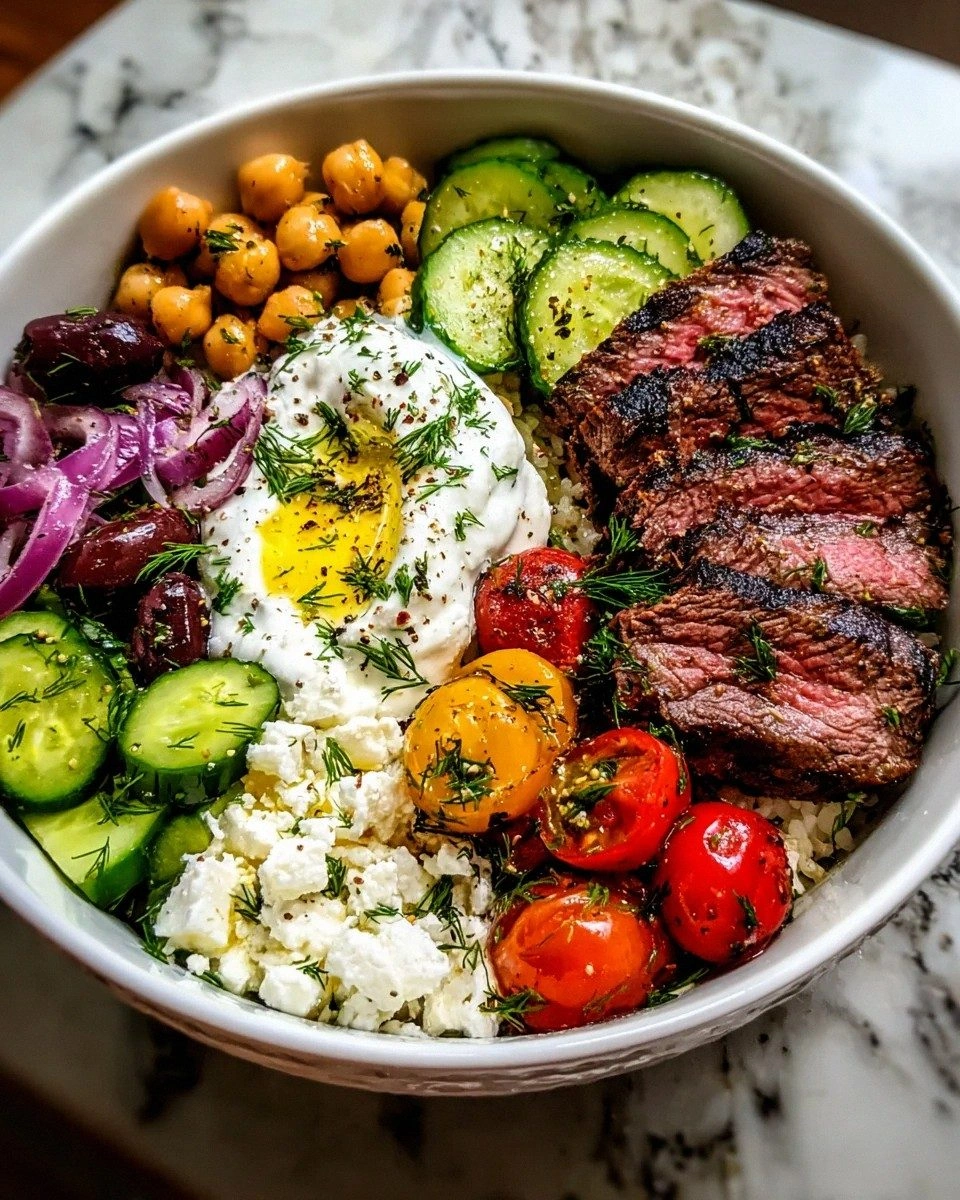
The Method — Step by Step
Start by whisking together 3 tablespoons of olive oil, the juice of two lemons, 4 minced garlic cloves, 1 teaspoon of dried oregano and thyme, and a pinch of salt and pepper in a shallow dish. This is the magic marinate that will turn a plain steak into a Mediterranean masterpiece. Let the sirloin steak (about 1.5 pounds, sliced into 1‑inch strips) soak in the mixture for at least 20 minutes; if you have time, go for an hour in the fridge for deeper flavor penetration. Power tip: the acid from the lemon begins to break down muscle fibers, ensuring every bite stays juicy.
Kitchen Hack: Pat the steak dry with paper towels before searing; excess moisture will steam the meat and prevent that coveted crust.While the steak marinates, pre‑cook your grains. Rinse 2 cups of quinoa under cold water, then combine with 4 cups of water in a saucepan. Bring to a boil, then reduce to a simmer, cover, and let it cook for 15 minutes until the grains are fluffy and the water is absorbed. Fluff with a fork and set aside, keeping it warm. If you prefer brown rice, increase the cooking time to 45 minutes; for cauliflower rice, simply sauté it for 5 minutes with a splash of olive oil.
Next, make the tzatziki. In a bowl, combine ½ cup plain Greek yogurt, 1 cup finely diced cucumber (squeeze out excess water), the remaining 2 cloves of minced garlic, 1 teaspoon honey, a drizzle of olive oil, and a pinch of salt. Stir until smooth, then let it rest while you finish the veggies. This resting period allows the flavors to meld, turning a simple dip into a velvety sauce that clings to every ingredient.
Heat a heavy skillet or cast‑iron pan over medium‑high heat until it’s hot enough that a drop of water sizzles and evaporates instantly. Add a splash of olive oil, then lay the marinated steak strips in a single layer, giving them room to breathe. Let them sear undisturbed for about 2 minutes; you’ll hear a satisfying sizzle that signals the Maillard reaction is in full swing. Flip the strips and cook another 2‑3 minutes for medium‑rare, or longer if you prefer well‑done. Watch out: overcrowding the pan will steam the meat instead of searing it, resulting in a soggy texture.
Watch Out: If you notice the steak releasing a lot of liquid, the pan isn’t hot enough—give it a minute more before adding the meat.While the steak rests (yes, you must let it rest—this is non‑negotiable), toss the chickpeas, cherry tomatoes, cucumber, red onion, and Kalamata olives in a large mixing bowl. Drizzle with a tablespoon of olive oil, a squeeze of lemon, and a pinch of salt and pepper. Toss until everything is evenly coated. The lemon will brighten the vegetables, while the olive oil ensures they don’t dry out.
Now, assemble the bowl. Start with a generous scoop of the cooked quinoa (or your grain of choice) at the bottom. Arrange the seared steak strips on top, then fan out the vegetable medley around the meat. Sprinkle the roasted chickpeas for crunch, crumble feta over everything, and scatter fresh herbs for that final burst of green.
Kitchen Hack: Slice the steak against the grain; this shortens muscle fibers and makes each bite tender.Finish each bowl with a generous dollop of tzatziki, a drizzle of any leftover lemon‑herb vinaigrette, and an extra sprinkle of feta if you’re feeling indulgent. The sauce should glide over the steak like velvet, coating every morsel without drowning the fresh veggies. Take a moment to admire the colors—deep reds, bright greens, golden chickpeas—your bowl is practically a work of art.
Serve immediately, but if you’re prepping ahead, keep the sauce and the steak separate until the last minute. This prevents the grains from getting soggy and preserves the steak’s crust. That’s it — you did it. But hold on, I’ve got a few more tricks that’ll take this to another level…
Insider Tricks for Flawless Results
The Temperature Rule Nobody Follows
Never cook steak straight from the fridge; let it sit at room temperature for 20‑30 minutes. This small step ensures the interior cooks evenly and the exterior gets that perfect sear. I once tried cooking a frozen steak and ended up with a burnt crust and a raw center—lesson learned. The rule of thumb: the pan should be hot enough that a drop of water dances, not sizzles into a hiss.
Why Your Nose Knows Best
Your sense of smell is a more reliable indicator of doneness than a timer. When the steak hits the pan, you’ll hear a sharp sizzle that turns into a softer, buttery crackle as the crust forms. If you catch a faint caramel aroma, you’re at the perfect point to flip. Trust that nose—it’s your built‑in sous‑chef.
The 5‑Minute Rest That Changes Everything
After searing, let the steak rest on a warm plate, loosely tented with foil, for at least five minutes. This rest allows the juices to redistribute, turning a dry slice into a succulent one. Skipping this step is the fastest way to ruin a good steak, and I’ve seen it happen countless times in rushed kitchens.
Tzatziki Timing Trick
Mix the tzatziki at least 10 minutes before serving, and cover it with plastic wrap pressed directly onto the surface. This prevents a skin from forming and lets the cucumber release its water into the yogurt, creating a thicker, more cohesive sauce. If you’re in a hurry, a quick 2‑minute stir will still work, but the flavor depth won’t be as pronounced.
Roasting Chickpeas for Maximum Crunch
Pat the chickpeas completely dry before tossing them in oil and spices. Spread them on a single layer on a baking sheet and roast at 425°F for 20‑25 minutes, shaking the pan halfway through. The high heat creates a crackling exterior that stays crunchy even after being mixed into the bowl.
Layering Flavors Like a Pro
Think of the bowl as a flavor pyramid: the base (grains) is neutral, the middle (veggies and chickpeas) adds brightness and texture, and the peak (steak and tzatziki) delivers richness. By arranging ingredients in this order, each bite offers a balanced progression from light to bold. This layering trick turns a simple mix‑and‑match into a culinary journey.
Creative Twists and Variations
This recipe is a playground. Here are some of my favorite ways to switch things up:
Mediterranean‑Meets‑Mexican
Swap the feta for crumbled cotija, add a spoonful of guacamole, and sprinkle chipotle powder over the steak. The smoky heat of chipotle pairs surprisingly well with the lemon‑herb base, creating a cross‑cultural explosion that will wow any crowd.
Plant‑Powered Power Bowl
Replace the sirloin with grilled halloumi or marinated tempeh. Use cauliflower rice instead of quinoa, and double the chickpeas for protein. The result is a fully vegetarian bowl that still delivers the satisfying chew of steak.
Spicy Sriracha Kick
Stir a tablespoon of sriracha into the tzatziki for a fiery twist, and add thinly sliced jalapeños to the veggie mix. The heat balances the cool yogurt, making each spoonful a delightful contrast.
Herb‑Infused Grain Upgrade
Cook the quinoa in low‑sodium chicken broth and stir in fresh mint and parsley right before serving. The herb‑infused grains become aromatic partners to the steak, elevating the overall fragrance.
Citrus‑Burst Variation
Add orange zest to the marinate and a splash of fresh orange juice to the vinaigrette. The citrus notes become more complex, giving the bowl a sunny, summer vibe even in winter.
Storing and Bringing It Back to Life
Fridge Storage
Separate the components: keep the steak, grains, veggies, and tzatziki in airtight containers. They’ll stay fresh for up to 4 days. When you’re ready to eat, reheat the steak and grains in a skillet for 2‑3 minutes, then assemble with fresh veggies and a dollop of tzatziki.
Freezer Friendly
Freeze the cooked steak (sliced) and grains on a parchment‑lined tray, then transfer to a zip‑top bag. The veggies (except cucumber) and chickpeas also freeze well. Thaw overnight in the fridge, then reheat as above. The tzatziki should be made fresh; frozen yogurt changes texture.
Best Reheating Method
Add a splash of water or broth to the skillet before reheating the steak and grains; cover for a minute to create steam. This revives the moisture and prevents the steak from drying out. Toss the veggies quickly just to warm them, then finish with fresh tzatziki for that bright, cool contrast.