Last Sunday, I tried to rescue a batch of stale pumpkin bread that had been lounging in my pantry for far too long, and what emerged from that kitchen experiment was nothing short of a revelation. I was half‑expecting a soggy, sad mess, but instead the bread transformed into a golden, caramel‑kissed masterpiece that practically sang “welcome home” the moment it hit the skillet. The scent of cinnamon and nutmeg swirled with the sweet aroma of maple, turning my modest apartment into a cozy autumn café, even though it was still June. The moment I took a bite, the crunchy edges gave way to a melt‑in‑your‑mouth interior that was both fluffy and decadently spiced—an experience so satisfying I dared you to try it and not go back for seconds.
Most pumpkin French toast recipes I've encountered either drown the bread in a soggy egg bath or miss that essential buttery crunch that makes each bite feel like a hug from the inside. This version, however, flips the script by treating the pumpkin bread like a sturdy canvas, soaking it just enough to absorb the custard while preserving its structural integrity. The secret? A quick toast‑first technique that creates a protective crust, then a buttery, spice‑infused soak that penetrates without turning the loaf into mush. The result is a dish that balances sweet and savory, soft and crisp, in perfect harmony—hands down the best version you'll ever make at home.
But the magic doesn’t stop at the technique. I’m throwing in a splash of heavy cream to add richness, a drizzle of pure maple syrup for that deep amber sweetness, and a pinch of salt that makes the flavors pop like fireworks on a crisp night. I’ll also share a couple of unexpected twists—think toasted pecans for crunch and a dollop of whipped cream cheese for tang—that elevate this breakfast from ordinary to unforgettable. And because I’m a firm believer in sharing the love, I’ll walk you through every single step, sprinkling in hacks, warnings, and a few confessions along the way.
Picture yourself pulling this out of the skillet, the whole kitchen smelling like a pumpkin spice latte meets buttery toast, and the first bite delivering a symphony of textures that make you wonder how you ever tolerated plain pancakes. Okay, ready for the game‑changer? Let me walk you through every single step — by the end, you’ll wonder how you ever made it any other way.
What Makes This Version Stand Out
- Flavor Depth: The combination of pumpkin, warm spices, and real maple syrup creates layers that unfold with each bite, like a well‑written novel.
- Texture Contrast: Toasted edges that shatter like thin ice give way to a custardy interior, delivering crunch and melt‑in‑your‑mouth softness in one forkful.
- Simplicity: Only pantry staples and a couple of specialty items are needed, so you won’t have to run to the store mid‑prep.
- Uniqueness: A quick pre‑toast creates a barrier that most recipes skip, preventing sogginess and preserving the bread’s shape.
- Crowd Reaction: Guests often declare it “the best thing they’ve ever had for brunch,” and you’ll hear that line at least twice.
- Ingredient Quality: Using fresh pumpkin bread (or a high‑quality store‑bought loaf) ensures the spices penetrate fully without overwhelming the palate.
- Cooking Method: A blend of stovetop searing and optional oven finishing guarantees even browning and a buttery finish.
- Make‑Ahead Potential: The custard can be mixed up to a day ahead, letting you focus on the final sear when you’re ready to serve.
Inside the Ingredient List
The Flavor Base
First up is the custard, the heart‑and‑soul of any French toast. Eggs provide structure and richness, binding the milk, cream, and maple syrup into a silky mixture that seeps into every nook of the bread. If you skip the eggs, you’ll end up with a soggy mess that falls apart like a poorly built sandcastle. Milk (or half‑and‑half) introduces a subtle dairy sweetness while keeping the custard light enough to soak without weighing the bread down. For an extra touch of decadence, heavy cream adds buttery depth, turning the custard into a velvety sauce that coats each slice like a luxurious blanket.
The Texture Crew
Now, let’s talk about the crunchy sidekick: unsalted butter. When melted in the pan, butter creates a golden crust that crackles and sings as the bread meets the heat. It’s the difference between “meh” and “wow” because it adds a nutty, caramelized flavor that vanilla alone can’t achieve. Maple syrup contributes a deep amber sweetness that pairs perfectly with pumpkin’s earthiness, while a pinch of salt amplifies every spice note, making the flavors pop like fireworks on a crisp night.
The Unexpected Star
Here’s where the pumpkin truly shines: ground cinnamon and ground nutmeg are the dynamic duo that give this dish its signature autumnal vibe. Cinnamon adds warmth and a hint of clove‑like spice, while nutmeg provides a subtle, sweet earthiness that rounds out the flavor profile. If you’re feeling daring, a dash of vanilla extract can lift the entire mixture, giving it a fragrant backdrop that feels like a hug from the inside. Skipping any of these spices is like trying to watch a movie without sound—technically possible, but you’ll miss the magic.
The Final Flourish
Finally, the star of the show: pumpkin bread. Choose a loaf that’s dense enough to hold its shape yet tender enough to soak up the custard without disintegrating. If you can, pick a bread with real pumpkin puree and spices already baked in; it saves you a step and guarantees authentic flavor. For those with dietary restrictions, a gluten‑free pumpkin bread works just as well—just make sure it’s sturdy. And don’t forget the optional toppings: a dusting of powdered sugar, a drizzle of extra maple syrup, or a handful of toasted pecans for that extra crunch.
Everything's prepped? Good. Let’s get into the real action…
The Method — Step by Step
Start by cutting your pumpkin bread into 1‑inch cubes or thick slices, depending on your preference. If you’re using a loaf, aim for eight generous pieces—big enough to hold the custard but not so thick that they never cook through. Place the pieces on a baking sheet and set your oven to a low 200°F (93°C) to keep them warm while you prepare the batter; this prevents the bread from drying out.
Watch out for the dreaded “dry bread” scenario—if the loaf is too stale, it won’t soak properly and you’ll end up with a crumbly mess.
In a large mixing bowl, whisk together four large eggs until they’re light and frothy. Add one cup of milk, half a cup of heavy cream, two tablespoons of maple syrup, one teaspoon of vanilla extract, one teaspoon of ground cinnamon, half a teaspoon of ground nutmeg, and a quarter teaspoon of salt. Whisk until the mixture is uniform, with no streaks of egg or spice—a glossy, amber‑colored custard that smells like a fall market.
That sizzle when it hits the pan? Absolute perfection. This is the moment of truth.
Now for the pre‑toast: heat a large non‑stick skillet over medium heat and melt two tablespoons of unsalted butter. Once the butter foams and turns a light amber, lay the pumpkin bread pieces in a single layer. Let them cook for about two minutes per side, or until they develop a golden crust that’s firm to the touch. The aroma of butter and caramelized sugar will fill the kitchen, making it impossible to wait for the next step.
Don’t walk away from the skillet here; the edges should start pulling away from the pan, signaling they’re ready for the soak.
Transfer the toasted bread back to the baking sheet and, one by one, gently pour the custard over each piece. Let them sit for a minute or two, allowing the liquid to seep in. The bread should look glossy but not drenched—think of a sponge that’s been wrung out just enough to hold water without dripping.
If you notice any pieces still looking dry, give them a quick second dip; this ensures every bite is uniformly moist.
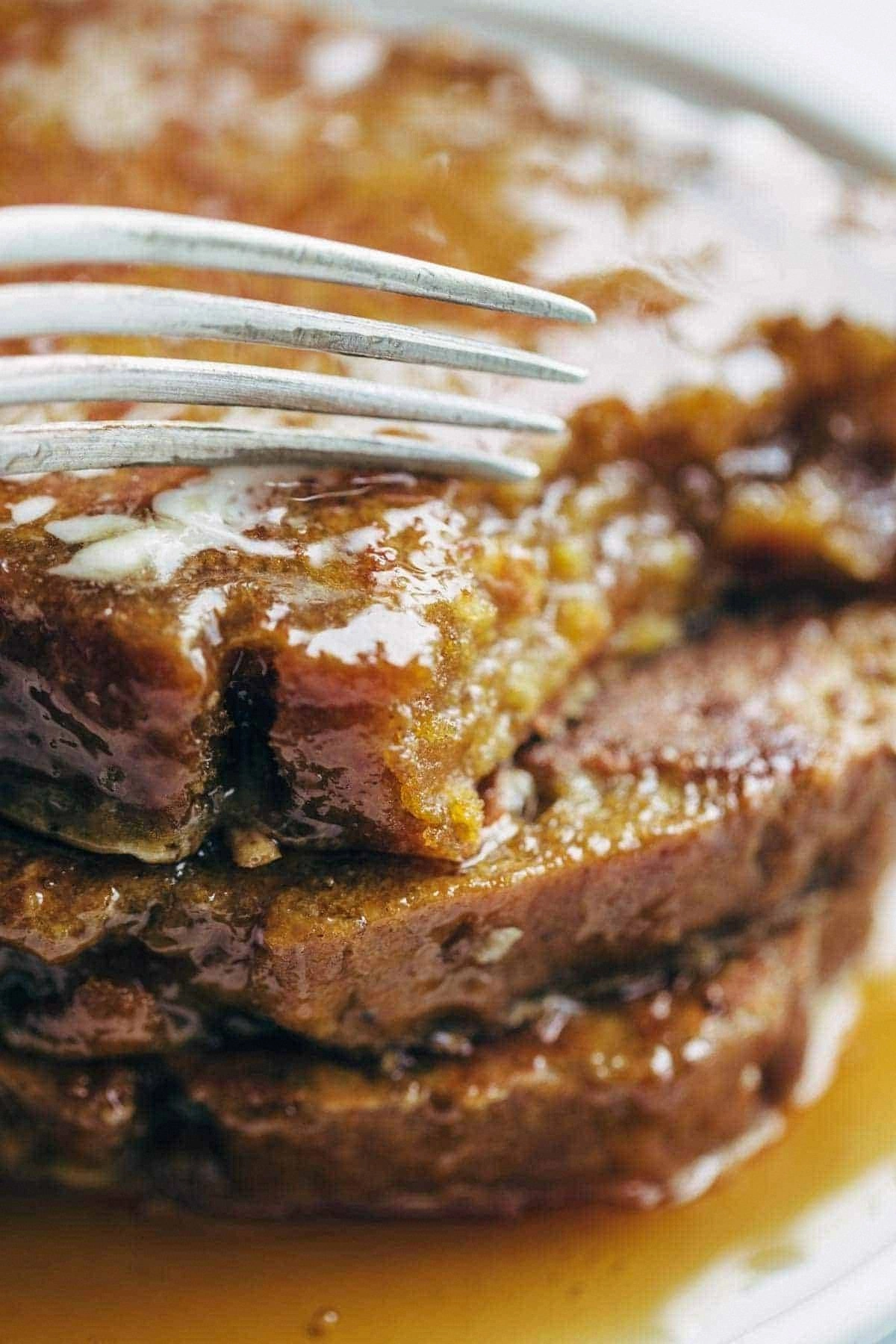
Heat the same skillet again over medium‑low heat, adding a touch more butter if needed. Carefully place the soaked bread pieces back into the pan, giving them a little space to breathe. Cook for about three to four minutes per side, until the edges turn a deep caramel brown and the interior feels springy when pressed with a spatula.
That gentle crackle as the edges brown? That’s the sound of flavor building.
Once the French toast reaches that perfect golden hue, transfer the pieces onto a warm serving platter. For an extra layer of decadence, melt a tablespoon of butter with a drizzle of maple syrup and brush it over the top, letting it pool into the crevices.
Now the fun part: sprinkle a light dusting of powdered sugar and, if you like, a handful of toasted pecans for crunch. The contrast between the silky custard and the nutty crunch is pure bliss.
Serve immediately with extra maple syrup on the side, a dollop of whipped cream cheese if you’re feeling indulgent, and a steaming mug of coffee or chai. The dish stays hot for about five minutes, but if you need to hold it longer, keep the platter in a low oven (200°F) and cover loosely with foil.
And now the fun part—watch your guests' faces light up as they take that first bite. I dare you to taste this and not go back for seconds.
That's it — you did it. But hold on, I've got a few more tricks that'll take this to another level...
Insider Tricks for Flawless Results
The Temperature Rule Nobody Follows
Keep your skillet at a consistent medium‑low heat. If the temperature spikes, the butter will smoke and the toast will scorch before the custard sets. I once tried a high‑heat blast, and the result was a blackened crust with a raw interior—definitely not the breakfast I was aiming for. Using a kitchen thermometer or simply testing with a drop of water (it should sizzle gently) helps maintain that sweet spot.
Why Your Nose Knows Best
Before you flip the toast, trust the aroma. When the butter‑infused edges start releasing a nutty, caramel scent, you’re close to the ideal golden color. If you’re unsure, lift a corner with a spatula—if the underside looks amber and the surface feels firm, it’s time to turn. This sensory checkpoint saves you from overcooking and ensures every bite is aromatic heaven.
The 5‑Minute Rest That Changes Everything
After the final sear, let the French toast rest for about five minutes on a warm plate. This brief pause allows the custard to settle, preventing a soggy bottom when you cut into it. A friend once tried to serve it immediately, and the sauce leaked everywhere, turning the plate into a sticky mess. Patience here rewards you with a perfectly set interior that holds its shape.
Swap the Milk, Keep the Magic
If you’re dairy‑free, substitute almond milk and coconut cream in equal parts for the milk and heavy cream. The flavor profile shifts slightly toward a tropical note, but the texture remains luscious. Just be aware that coconut cream can add a faint coconut flavor—great if you love it, but not if you prefer pure pumpkin spice.
Turn It Into a Brunch Board
Instead of serving the French toast on a single platter, arrange the slices on a large wooden board with bowls of fresh berries, a small pot of warm maple syrup, and a dollop of whipped cream cheese. This presentation feels upscale and invites guests to customize their plates, turning a simple breakfast into an interactive brunch experience.
Creative Twists and Variations
This recipe is a playground. Here are some of my favorite ways to switch things up:
Pecan‑Crunch Upgrade
Toast a cup of chopped pecans with a pinch of brown sugar and a drizzle of butter, then sprinkle them over the finished toast. The nuts add a buttery crunch that complements the pumpkin’s earthiness, perfect for those who love texture.
Apple‑Cider Infusion
Swap half of the milk for unsweetened apple cider and add a dash of fresh grated apple into the custard. The subtle fruity tang brightens the spice profile, making the dish feel like a crisp autumn morning.
Chocolate‑Swirl Delight
Fold in a tablespoon of cocoa powder into the custard and drizzle melted dark chocolate over the top before serving. The bitter chocolate contrasts beautifully with the sweet maple and pumpkin, creating a sophisticated flavor duo.
Savory Spin
Reduce the maple syrup to a teaspoon, add a pinch of smoked paprika, and serve with a side of crisp bacon. This savory version turns the dish into a hearty brunch centerpiece that satisfies both sweet and salty cravings.
Vegan Version
Replace eggs with a blend of 1 ¼ cups silken tofu, 2 tbsp flaxseed meal mixed with 6 tbsp water, and use oat milk plus coconut cream. The result is just as creamy, and the pumpkin flavor still shines through.
Storing and Bringing It Back to Life
Fridge Storage
Cool the French toast to room temperature, then place the slices in an airtight container lined with parchment paper. They’ll stay fresh for up to three days. When you’re ready to eat, reheat gently in a skillet with a dab of butter, adding a splash of water to steam the interior back to softness.
Freezer Friendly
Wrap each piece individually in plastic wrap, then stack them in a freezer‑safe bag. They freeze beautifully for up to two months. To revive, thaw overnight in the fridge, then crisp them in a hot skillet with a tablespoon of butter—add a tiny splash of water before the final minute to steam the interior back to perfection.
Best Reheating Method
For the ultimate reheated bite, preheat your oven to 350°F (175°C), place the toast on a parchment‑lined sheet, and bake for 8‑10 minutes. The edges will regain their crispness while the center stays soft. If you’re in a hurry, a quick 30‑second blast in the microwave followed by a brief skillet sear also works, but the oven method is unbeatable.