Love this? Pin it for later! 📌
I still remember the first time I tasted chicken katsu at a tiny izakaya in Osaka. The crunch of the panko, the juicy chicken, the sweet-savory tonkatsu sauce—it was love at first bite. But as much as I adored the classic, I kept craving a little heat and a fresher counterpoint than the usual mound of shredded cabbage. Fast-forward ten years and hundreds of test-kitchen Tuesdays later, and this Spicy Chicken Katsu With Tonkatsu Sauce And Cabbage Slaw Dinner has become the recipe my friends beg for every potluck. It marries that nostalgic Japanese comfort-food crunch with a chili-kissed crust and a bright, lime-laced slaw that lands it squarely in the salad category while still feeling like a Friday-night feast. Whether you’re feeding picky teenagers, wowing date-night guests, or simply treating yourself to a vibrant mid-week dinner, this dish delivers big flavors without demanding professional-chef skills.
Why This Recipe Works
- Double-dredge magic: A light dusting of cornstarch before the egg wash grabs onto extra panko for an ultra-crispy shell that stays crunchy even under sauce.
- Controlled heat: Gochugaru (Korean chili flakes) adds gentle, fruity heat that blooms in the hot oil without overwhelming the delicate chicken.
- Slaw as salad: Quick-pickled cabbage and carrots tossed while the cutlets fry give you a refreshing, tangy counterpoint that earns this dish its salad credentials.
- Make-ahead friendly: Bread the cutlets up to 8 hours ahead; fry and sauce just before serving for maximum crunch.
- Sheet-pan option: Oven-bake on a wire rack at 450 °F/230 °C if you’d rather skip stovetop splatter.
- Balanced nutrition: Lean breast, heart-healthy cabbage, and a modest 2 Tbsp sauce keeps calories reasonable while satisfying comfort-food cravings.
Ingredients You'll Need
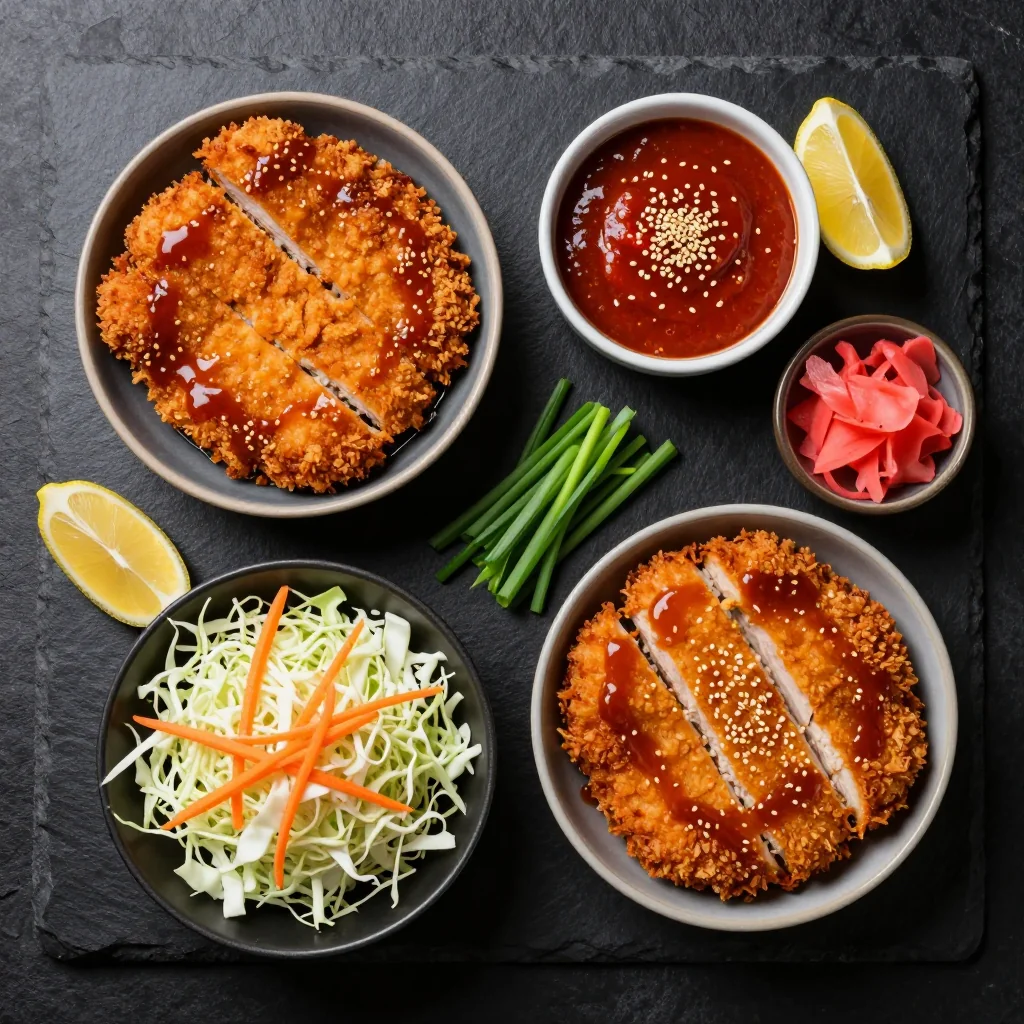
Great katsu starts with great chicken. Look for plump, even-sized boneless/skinless breasts—about 8 oz/225 g each—so they cook uniformly. If your grocer only carries massive 12-oz portions, butterfly and gently pound to ¾-inch thickness. Japanese panko (look for the jagged, long flakes rather than powdery “Italian” breadcrumbs) is non-negotiable for airy crunch; store it in the freezer so the oils don’t go rancid between fry-days. Gochugaru is worth seeking out for its mild, smoky heat, but if you can’t find it, an equal mix of sweet paprika and cayenne (start with ¼ tsp cayenne) works. For the slaw, choose a dense, heavy head of green cabbage; the leaves should squeak when rubbed together. Fresh carrots add color, but pre-shredded works in a pinch. The tonkatsu sauce is essentially Japanese barbecue sauce: fruity, tangy, slightly smoky. Bulldog is the classic bottled brand, yet our homemade version takes five minutes and lets you tweak sweetness and spice. Finally, use a neutral, high-smoke-point oil such as peanut, canola, or rice bran for frying; save the expensive extra-virgin olive oil for finishing, not searing.
How to Make Spicy Chicken Katsu With Tonkatsu Sauce And Cabbage Slaw Dinner
Prep the slaw base
Thinly slice ¼ medium head of green cabbage (about 4 cups) and julienne 1 medium carrot. Toss with ½ tsp kosher salt and 1 Tbsp rice vinegar; let stand while you continue—this quick pickle wilts the cabbage just enough and brightens the entire plate.
Make the tonkatsu sauce
In a small bowl whisk 3 Tbsp ketchup, 2 Tbsp Worcestershire, 1 Tbsp oyster sauce, 1 Tbsp honey, 1 tsp soy sauce, ½ tsp garlic powder, and ¼ tsp allspice. Set aside to let flavors meld; the sauce keeps two weeks refrigerated.
Butterfly & pound
Place each breast on a cutting board, press your palm on top, and slice horizontally through the thick side, stopping ½ inch from the opposite edge. Open like a book, cover with plastic wrap, and gently pound to ¾-inch thickness for even frying.
Season & coat
Sprinkle both sides with ½ tsp kosher salt and ¼ tsp white pepper. Set up three shallow dishes: ¼ cup cornstarch mixed with 1 tsp gochugaru, 2 beaten eggs, and 1½ cups panko tossed with 1 Tbsp gochugaru. Dust chicken in cornstarch, shake excess, dip in egg, then press firmly into panko; turn and press again for a thick, even coat.
Heat the oil
Pour ½ inch of neutral oil into a heavy skillet (cast-iron preferred). Heat over medium until a crumb of panko sizzles immediately—about 340 °F/170 °C on a thermometer. Too hot and the crust burns before the meat cooks; too cool and the coating absorbs excess oil.
Fry to golden
Lay cutlets gently away from you to avoid splatter. Fry 2-3 min per side until deep golden; flip once. Transfer to a wire rack set over a sheet pan and keep warm in a 200 °F/95 °C oven while you finish remaining pieces.
Finish the slaw
Squeeze ½ lime and 1 tsp honey into the cabbage. Add 1 Tbsp toasted sesame seeds and 1 Tbsp thinly sliced scallion; toss. Taste and adjust salt or honey for a zippy, sweet-tart crunch.
Slice & plate
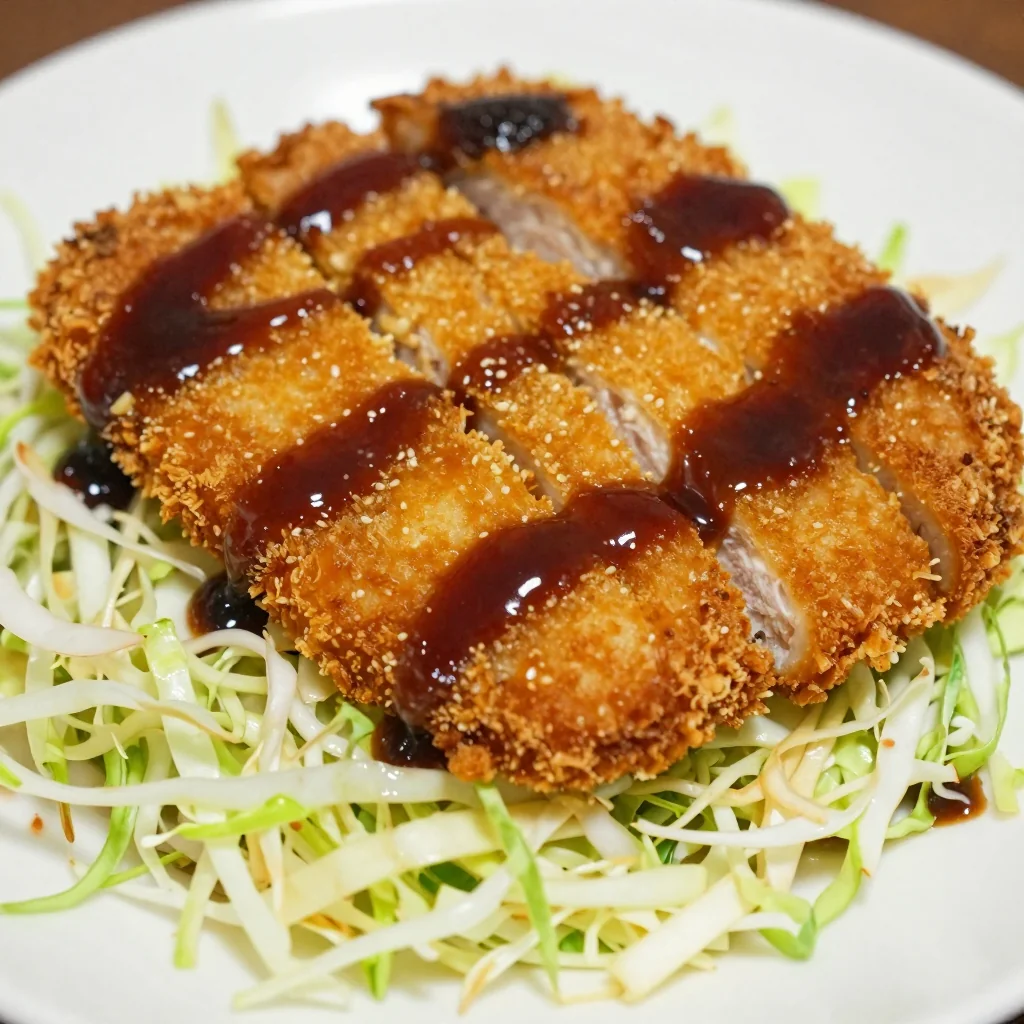
Rest cutlets 2 min, then slice crosswise into 1-inch strips. Fan over a bed of slaw, drizzle with tonkatsu sauce, and shower with extra scallion and a lime wedge. Serve immediately while the crust crackles.
Expert Tips
Oil maintenance
Skim stray panko between batches to prevent bitter, burnt specks. Cool, strain, and refrigerate oil; reuse once for vegetables, then discard.
Thermometer trust
An inexpensive probe beats guesswork. Maintaining 340-350 °F gives you 4-5 min total cook time for juicy chicken and a blister-free crust.
Rest, don’t rush
A 2-minute rest equalizes juices and keeps the cutlet succulent when you slice. Tent loosely with foil on the rack, not on a plate—steam is the enemy of crisp.
Gluten-free swap
Replace panko with crushed gluten-free cornflakes mixed with 1 Tbsp nutritional yeast for umami and color. Use rice flour instead of cornstarch.
Freezer option
Bread the cutlets, layer between parchment, and freeze solid. Fry from frozen 5-6 min per side; crumbs won’t fall off and center stays juicy.
Air-fryer hack
Spray breaded cutlets generously with oil. Cook at 375 °F/190 °C for 8 min per side. Flip gently with tongs; crust will be nearly as crisp as deep-fry.
Variations to Try
- Pork katsu twist: Substitute boneless pork loin, pounded to ½ inch, and add 1 tsp sage to the cornstarch for an herby note.
- Tofu katsu: Use extra-firm tofu pressed 30 min; coat in seasoned cornstarch, then egg, then panko mixed with 2 Tbsp sesame seeds.
- Kimchi slaw: Replace carrot with ½ cup chopped kimchi and 1 tsp gochujang in the dressing for a fiery Korean-Japanese mash-up.
- Coconut crust: Swap half the panko for unsweetened coconut flakes and serve with a pineapple-lime dipping sauce.
- Low-carb crunch: Use crushed pork rinds mixed with almond flour; bake on an oiled rack at 425 °F for 12 min per side.
Storage Tips
Leftover fried cutlets will keep 3 days refrigerated, but the crust sacrifices its magic. For best texture, cool completely, layer between parchment, and refrigerate in an airtight container. Reheat on a wire rack set over a sheet pan at 400 °F for 8-10 min, flipping halfway. Microwaves turn panko soggy—avoid them. Slaw is best within 24 hours; after that it begins to weep. Store it separately and refresh with a squeeze of lime and a pinch of salt. Tonkatsu sauce keeps 2 weeks refrigerated in a jar; bring to room temp before drizzling so the honey loosens up. Breaded, uncooked cutlets freeze beautifully for 2 months; fry directly from frozen or thaw overnight in the fridge for 8 hours before cooking.
Frequently Asked Questions
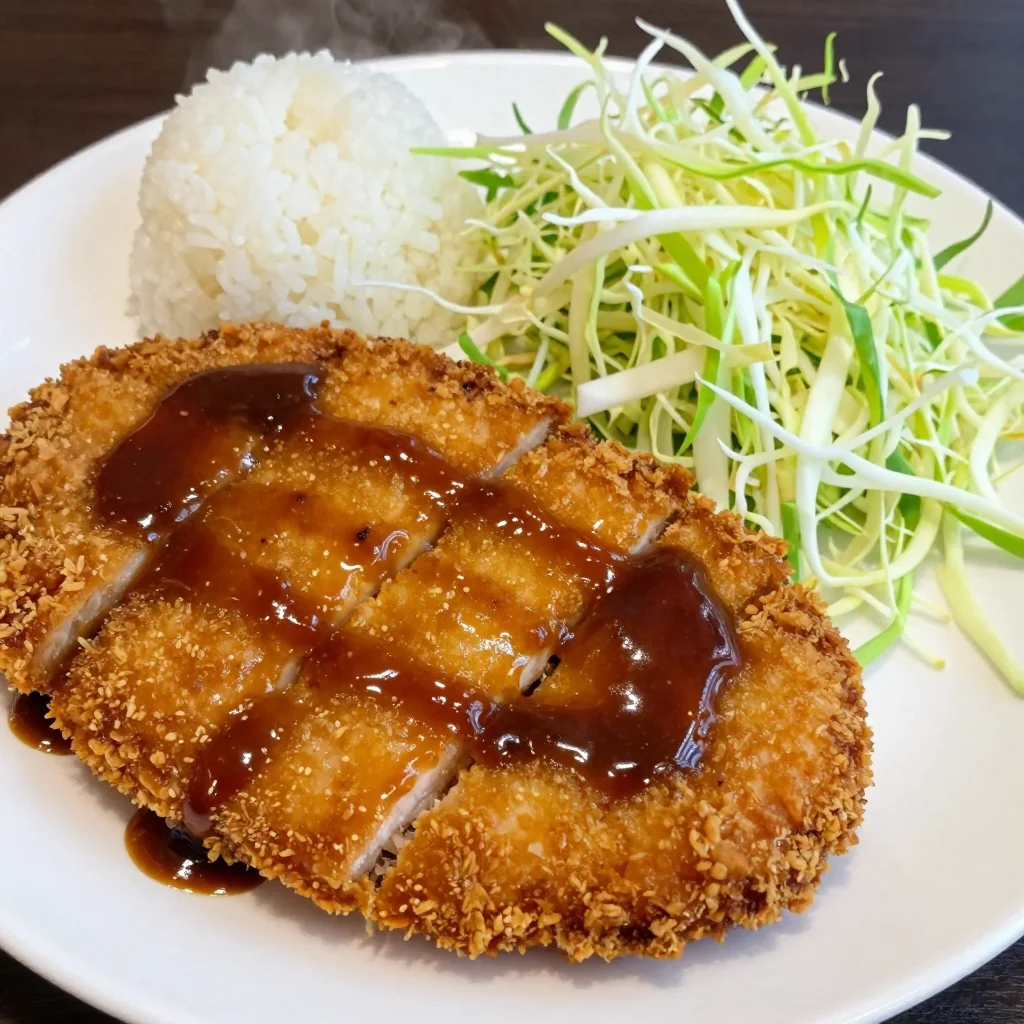
Spicy Chicken Katsu With Tonkatsu Sauce And Cabbage Slaw Dinner
Ingredients
Instructions
- Quick-pickle slaw: Toss cabbage and carrot with ½ tsp salt and rice vinegar; set aside.
- Mix tonkatsu sauce: Whisk ketchup, Worcestershire, oyster sauce, honey, soy, garlic powder, and allspice until smooth.
- Prep chicken: Butterfly, pound to ¾ inch, then season with ½ tsp salt and white pepper.
- Bread: Coat in cornstarch mixed with 1 tsp gochugaru, dip in egg, then press into panko combined with remaining 1 tsp gochugaru.
- Fry: Heat oil to 340 °F. Fry cutlets 2-3 min per side until golden and internal temp reaches 165 °F. Drain on wire rack.
- Finish slaw: Add lime juice, honey, sesame seeds, and scallion to cabbage; toss.
- Serve: Slice katsu, plate over slaw, drizzle with tonkatsu sauce, and garnish with scallion.
Recipe Notes
For extra crunch, double-coat: after the first panko layer, dip back into egg and press into fresh panko. Rest 10 min before frying to set the crust.