Love this? Pin it for later! 📌
Since then, I’ve tweaked the recipe every winter, fine-tuning the balance of sweet and savory, testing varieties of squash, and playing with apple combinations. The version I’m sharing today is the one my friends request for potlucks, the one I batch-cook on Sunday afternoons so I can grab a jar on the way to work, and the one that turns a simple lunch into a moment of hygge at my desk. It’s creamy without any heavy cream (though you can certainly add a splash), vegan-adaptable, freezer-friendly, and—most importantly—ready in under an hour from start to finish.
Why This Recipe Works
- Layered Sweetness: Roasting the squash concentrates its sugars, while tart apples brighten every spoonful.
- Aromatics First: Sautéing onion, garlic, and a whisper of fresh thyme in olive oil builds a savory backbone.
- Texture Without Cream: A single Yukon gold potato gives silkiness; blend it silky-smooth or leave a little rustic texture.
- Make-Ahead Marvel: Flavors meld overnight, so tomorrow’s lunch tastes even better.
- Freezer-Friendly: Portion into mason jars, freeze flat, and reheat straight from frozen on busy weekdays.
- Customizable Heat: Add a pinch of cayenne or smoked paprika to suit your mood.
- Toppings Galore: Toasted seeds, crispy pancetta, or a drizzle of maple-spiced yogurt turn a simple soup into a show-stopper.
Ingredients You'll Need
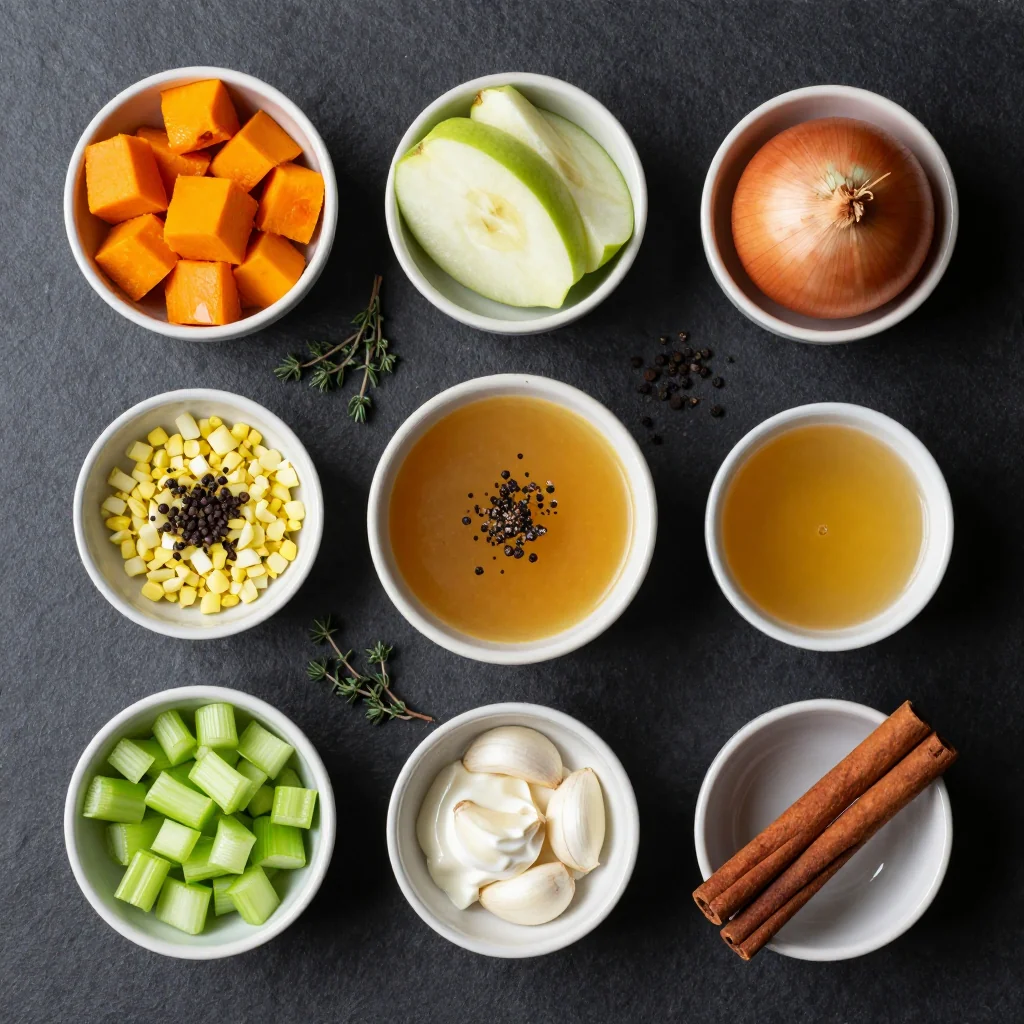
Great soup starts at the market. Look for a butternut squash that feels heavy for its size with matte, unblemished skin; a shiny patch usually indicates it was picked underripe. I prefer Honeycrisp or Pink Lady apples here—both hold their shape and deliver a sweet-tart punch. If you only have Granny Smith, add an extra teaspoon of maple syrup to balance the tang.
Butternut Squash: One large squash (about 3 lb) yields roughly 6 cups cubed. If you’re short on time, many grocers sell pre-cubed squash. The flavor won’t be quite as deep, but you can compensate by roasting the cubes with a drizzle of maple syrup until the edges caramelize.
Apples: Two medium apples, peeled so they melt seamlessly into the soup. Reserve a few thin matchsticks for garnish if you like a fresh crunch.
Yukon Gold Potato: Adds body without tasting starchy. Russets work in a pinch, but Yukon golds have a naturally buttery flavor.
Yellow Onion & Garlic: The aromatic base. I slice the onion pole-to-pole so it melts down faster.
Fresh Thyme: Woodsy and wintery. Strip leaves by pinching the top of the stem and sliding fingers downward. Dried thyme works—use ½ teaspoon—but fresh is brighter.
Vegetable Broth: Choose a low-sodium, good-quality broth. If you’re vegetarian, look for one without tomato paste (it muddies color). If you eat chicken, a light homemade stock is divine.
Apple Cider: Just ½ cup adds orchard sweetness. If you can’t find cider, use unsweetened apple juice and reduce the maple syrup slightly.
Maple Syrup: A tablespoon amplifies the apples’ sweetness. Substitute with honey if that’s what you have.
Extra-Virgin Olive Oil: For roasting and sautéing. A peppery Greek oil complements the soup beautifully.
Sea Salt & White Pepper: White pepper keeps the color pristine, but black pepper is fine—flavor trumps aesthetics.
Optional Finishes: Coconut milk for vegan creaminess, crème fraîche for tang, toasted pepitas for crunch, or crispy pancetta for omnivores.
How to Make Warm Butternut Squash and Apple Soup for January Lunch
Roast the Squash
Preheat oven to 425 °F (220 °C). Peel, seed, and cube the butternut squash into ¾-inch pieces. Toss with 1 tablespoon olive oil, ½ teaspoon salt, and a grind of pepper on a parchment-lined sheet pan. Roast 20 minutes, stir once, then roast another 10–15 minutes until edges are caramelized and a knife slides through effortlessly. Roasting intensifies sweetness and prevents watery soup.
Sauté Aromatics
While the squash roasts, warm 1 tablespoon olive oil in a heavy Dutch oven over medium heat. Add the sliced onion and cook 5 minutes until translucent, stirring occasionally. Add garlic and thyme; cook 1 minute until fragrant but not browned. The goal is to coax out sweetness without coloring the mixture too much.
Deglaze & Build Flavor
Pour in ½ cup apple cider and scrape the pot with a wooden spoon to lift any caramelized bits. Let it bubble for 2 minutes until slightly reduced. This step concentrates the apple flavor and creates a flavor base called a fond.
Add Remaining Ingredients
Tip in the roasted squash, diced potato, peeled apple chunks, 3 cups broth, 1 teaspoon salt, and ¼ teaspoon white pepper. The liquid should just barely cover the solids; add an extra splash of broth or water if needed.
Simmer Until Tender
Bring to a gentle boil, then reduce heat, partially cover, and simmer 18–20 minutes until potato and apples are very soft. A knife should meet zero resistance when piercing a potato cube.
Blend to Velvet
Remove from heat and let cool 5 minutes (hot soup can erupt in a blender). Blend in batches until ultra-smooth, or use an immersion blender directly in the pot. For an extra silky texture, pass through a fine-mesh sieve. Return soup to pot.
Adjust Consistency & Seasoning
Stir in ½–1 cup additional broth to reach your desired thickness. I like it thick enough to coat the back of a spoon but pourable. Add maple syrup, then taste and adjust salt. A squeeze of lemon brightens everything if your apples are very sweet.
Serve & Garnish
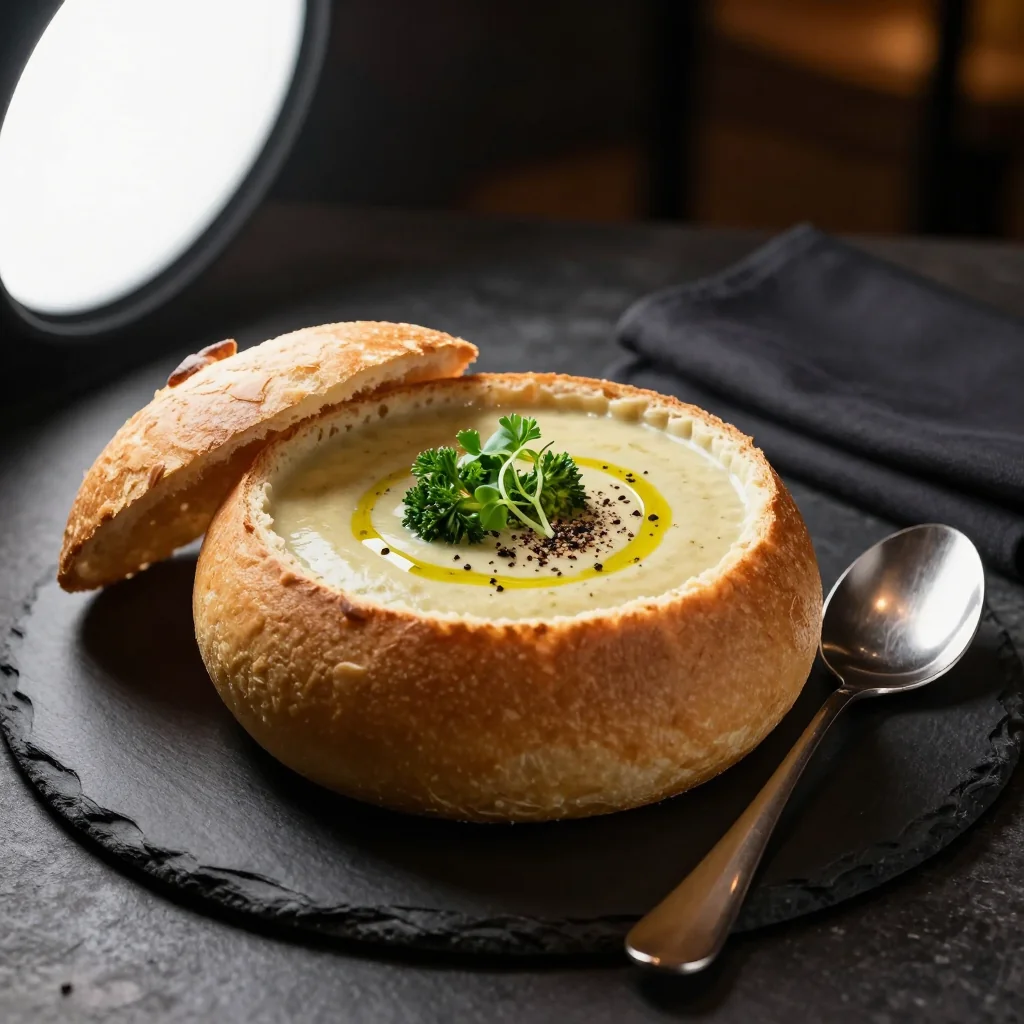
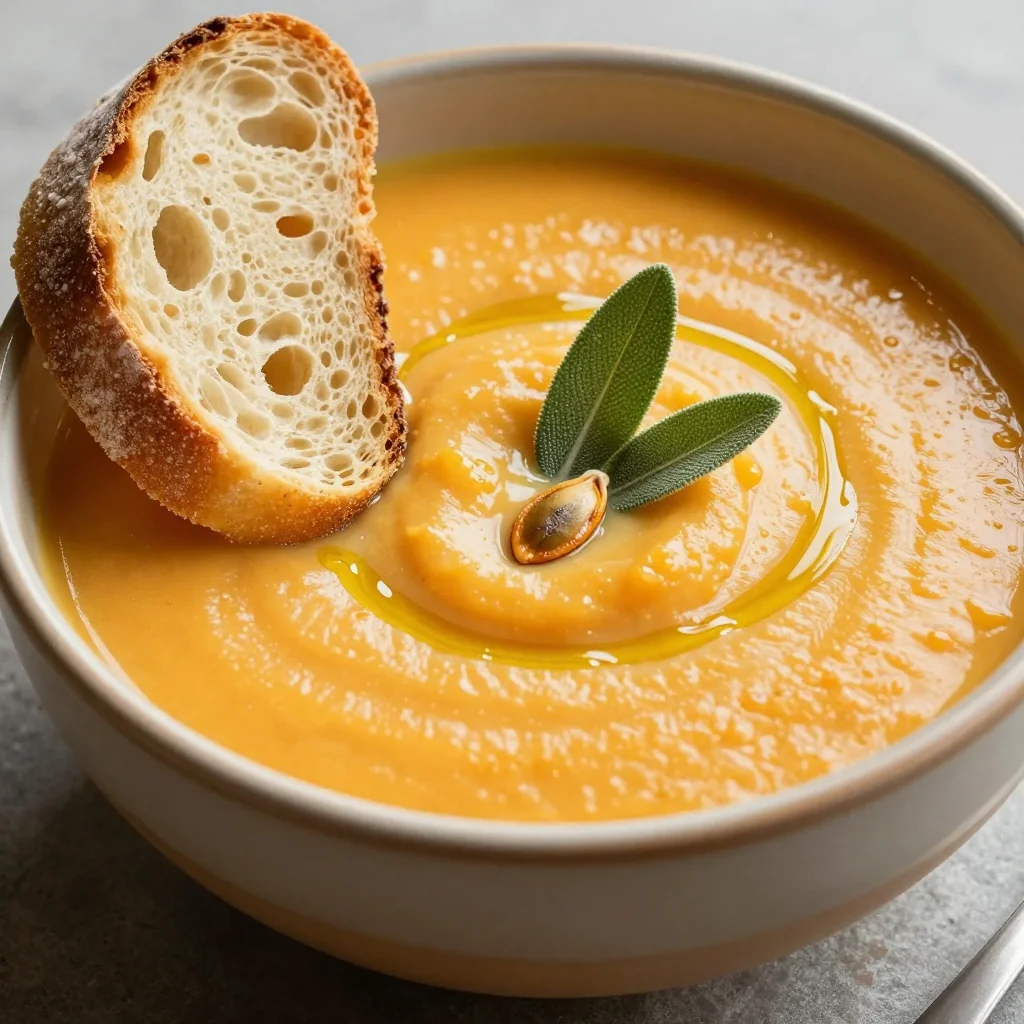
Ladle into warm bowls. Swirl with coconut milk or crème fraîche, scatter toasted pepitas, add a crack of black pepper, and drizzle good olive oil for a glossy finish. Pair with crusty sourdough or grilled cheddar sandwiches for the ultimate January lunch.
Expert Tips
Roast Extra Squash
Double the amount and freeze cubes for quick weeknight grain bowls or salads later.
Chill Before Blending
Letting the soup cool slightly prevents steam blowouts and yields a creamier texture.
Use a Vitamix
If you own a high-speed blender, blitz on high for 90 seconds for mousse-like silkiness.
Spice It Up
A pinch of smoked paprika or curry powder transforms the profile without extra work.
Save the Seeds
Rinse, dry, and roast squash seeds with olive oil and salt for a crunchy topping.
Double Batch Rule
Soup shrinks as it simmers; make twice what you think you need and freeze half.
Variations to Try
- Carrot-Ginger Twist: Swap 1 cup squash for carrots and add 1 tablespoon grated fresh ginger with the garlic.
- Coconut Curry: Use coconut oil to sauté, add 1 teaspoon Thai red curry paste, and finish with full-fat coconut milk.
- Pear & Sage: Replace apples with ripe Bartlett pears and fresh sage leaves for a more floral profile.
- Savory Bacon: Render 3 strips of bacon, use the fat instead of oil, and crumble bacon on top for smoky depth.
- Lemon-Tahini Swirl: Whisk 2 tablespoons tahini with juice of ½ lemon and drizzle for nutty richness and extra protein.
Storage Tips
Refrigerator: Cool soup completely, transfer to airtight containers, and refrigerate up to 5 days. Reheat gently over medium-low heat, thinning with broth or water as needed.
Freezer: Ladle into straight-edged mason jars (leave 1 inch headspace) or silicone Souper Cubes. Freeze up to 3 months. Thaw overnight in the fridge or use the defrost setting on a microwave.
Make-Ahead Lunches: Portion into single-serve thermos bottles; they’ll stay hot until noon without additional reheating. Stir in a spoonful of Greek yogurt just before eating for extra staying power.
Frequently Asked Questions
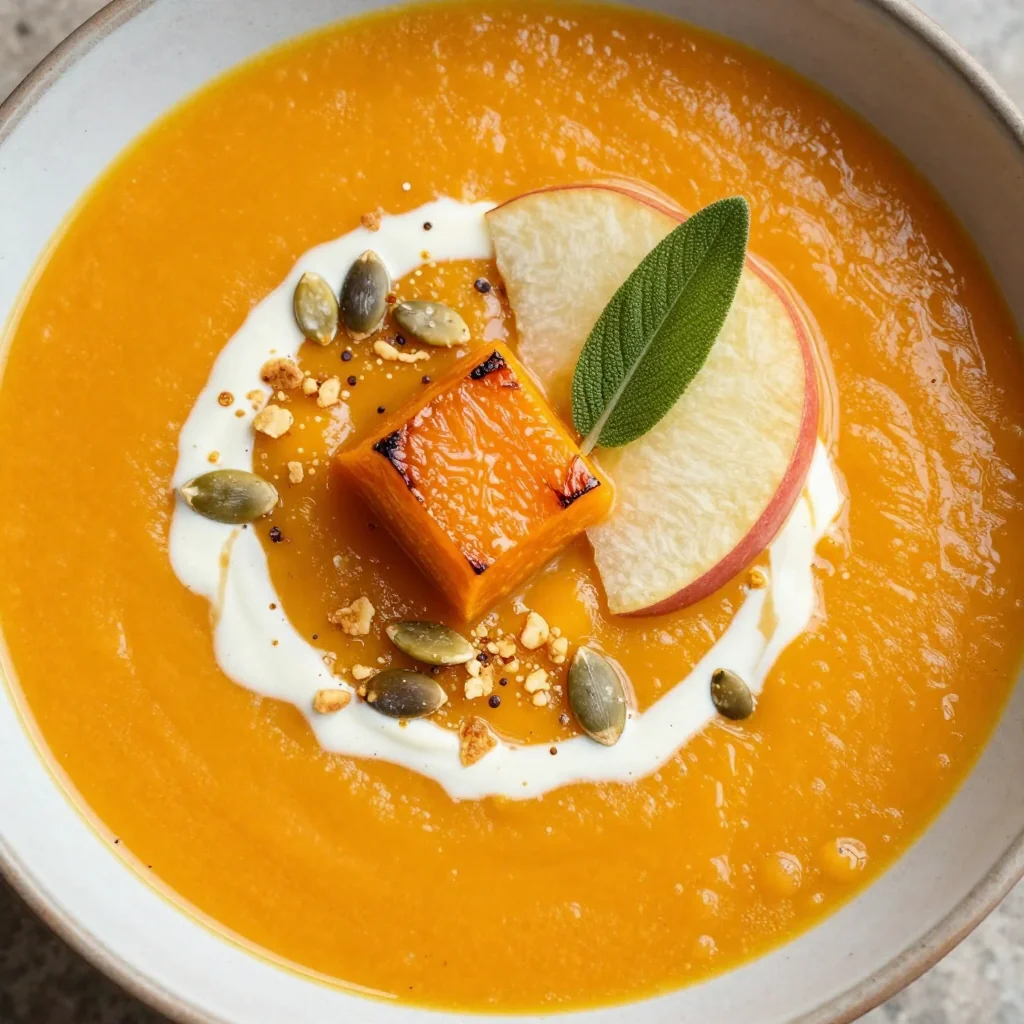
Warm Butternut Squash and Apple Soup for January Lunch
Ingredients
Instructions
- Roast Squash: Preheat oven to 425 °F. Toss squash with 1 Tbsp oil and salt; roast 30 min until caramelized.
- Sauté Aromatics: In a Dutch oven, heat remaining 1 Tbsp oil over medium. Cook onion 5 min, add garlic & thyme 1 min.
- Deglaze: Add cider; simmer 2 min, scraping bits.
- Simmer: Add roasted squash, apples, potato, 3 cups broth, maple syrup, salt, pepper. Simmer 20 min until very tender.
- Blend: Puree until smooth; thin with extra broth as needed.
- Serve: Taste, adjust seasoning, and ladle into bowls. Swirl with coconut milk and top with toasted seeds.
Recipe Notes
Soup thickens as it stands; thin with broth when reheating. Freeze portions in mason jars (leave headspace) for up to 3 months.